<10min read
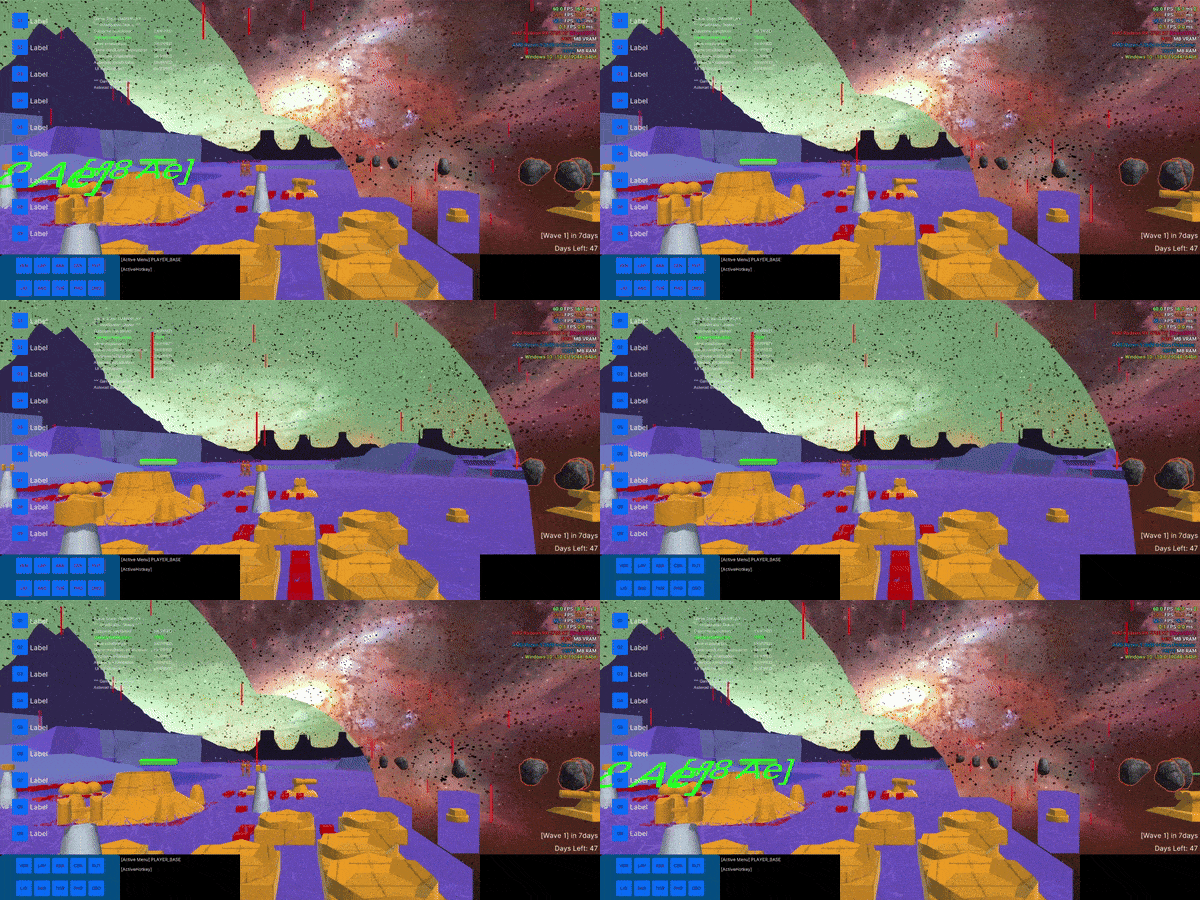
Strategy games, at their heart, are imperfect information games with an emphasis on decision making. Mistakes accumulate, good engagements stack up, inefficiencies get exposed and you either snowball to victory or become the first to gg.
Resources
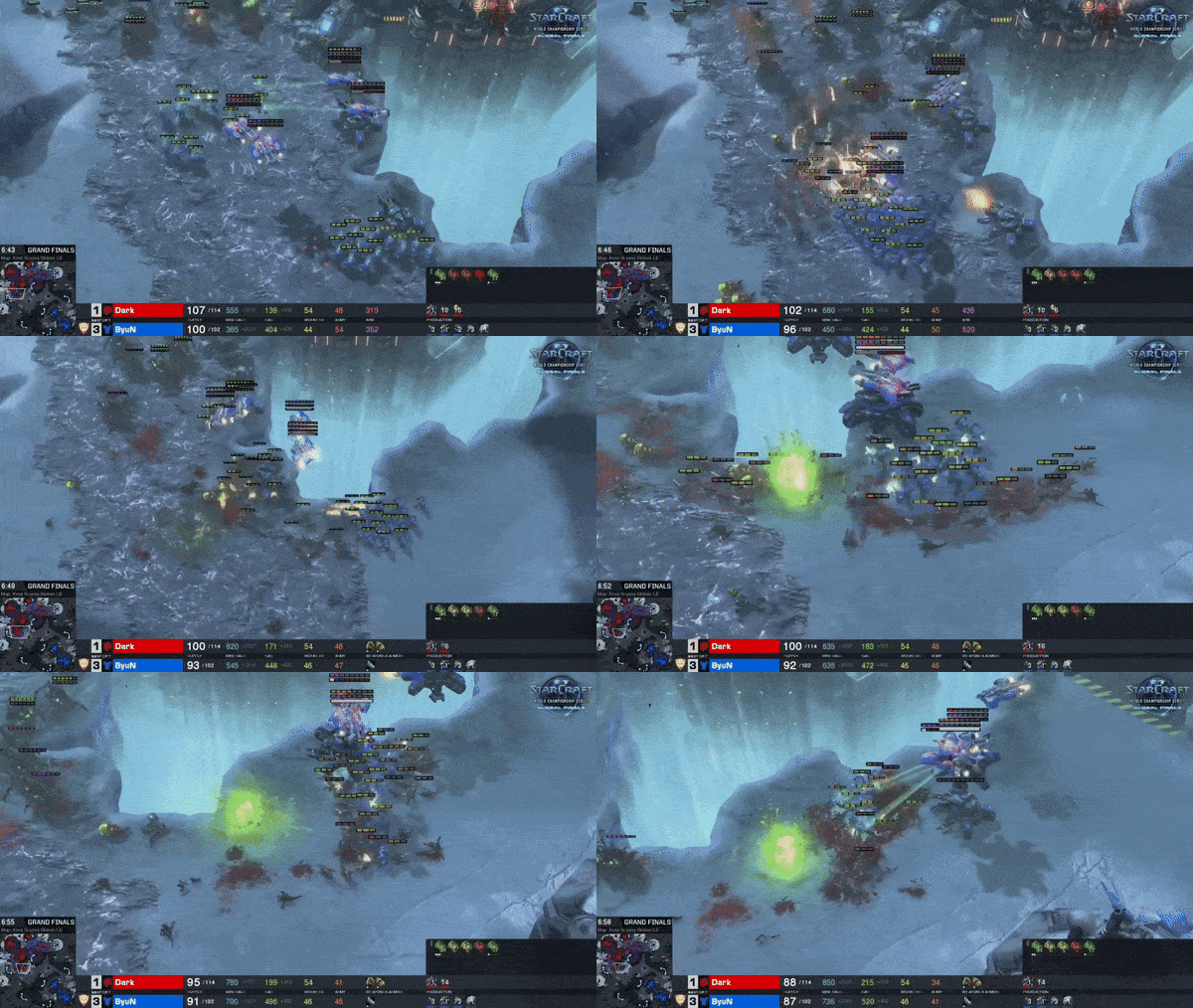
The core loop of these games generally revolves around resource management, whether that’s; gathering, spending or preserving what you’ve spent with better micro (how on earth Byun manages to keep his marines alive is still beyond me 7 years later).
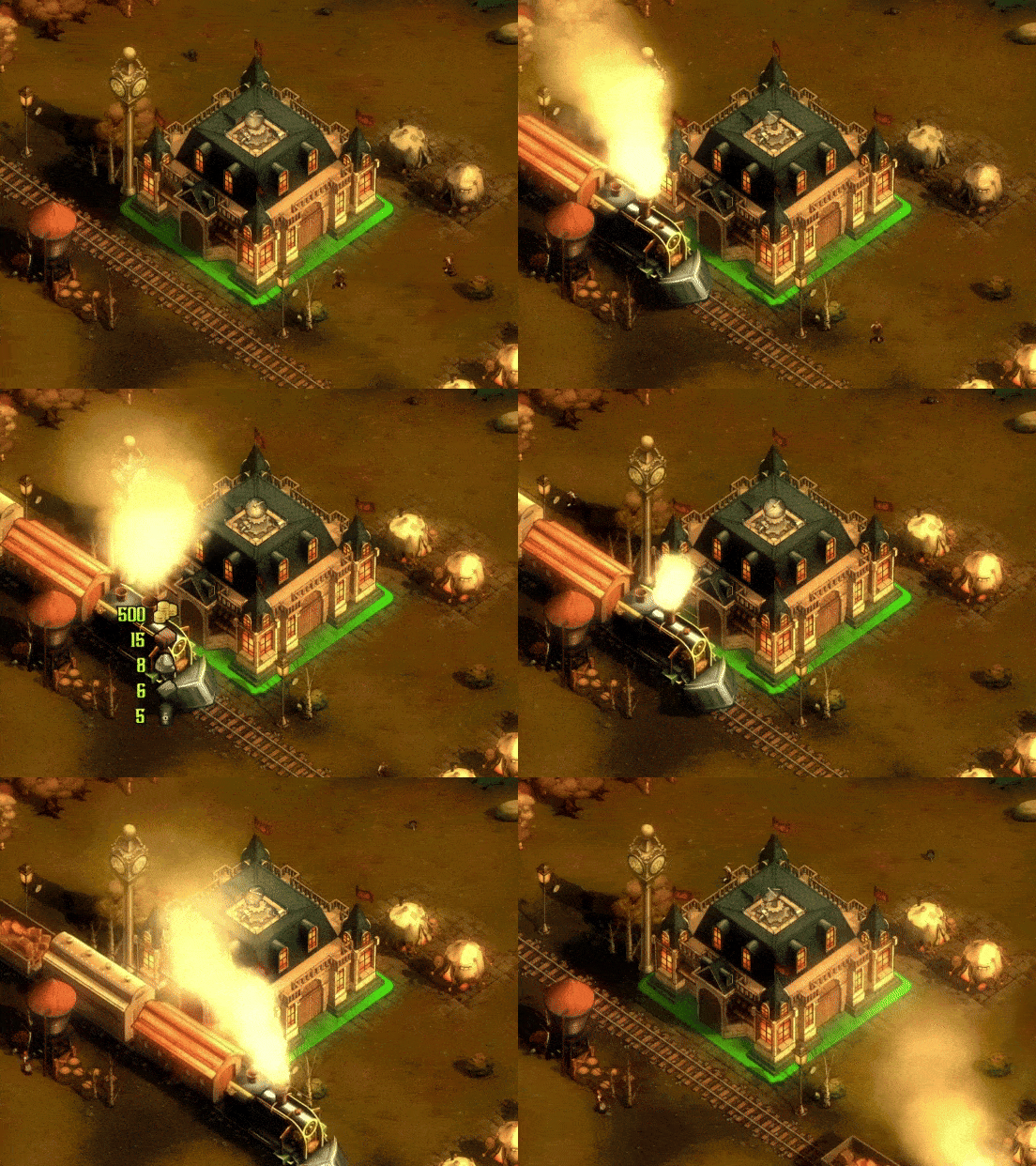
They can be as conventional as wood to power an economy, production buffs like strategic points, as abstract as time for a delivery, or provide gameplay buffs like Zerg creep.
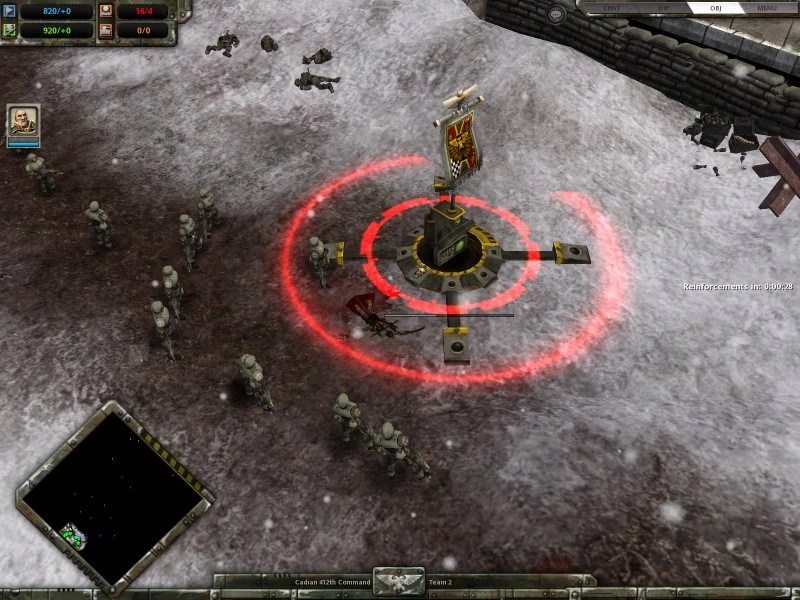
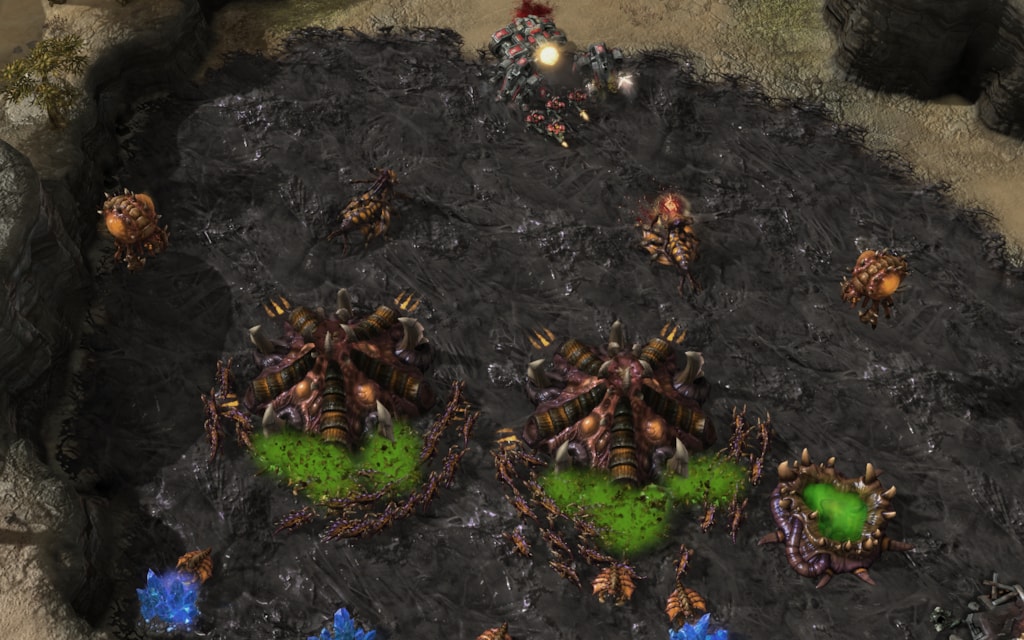
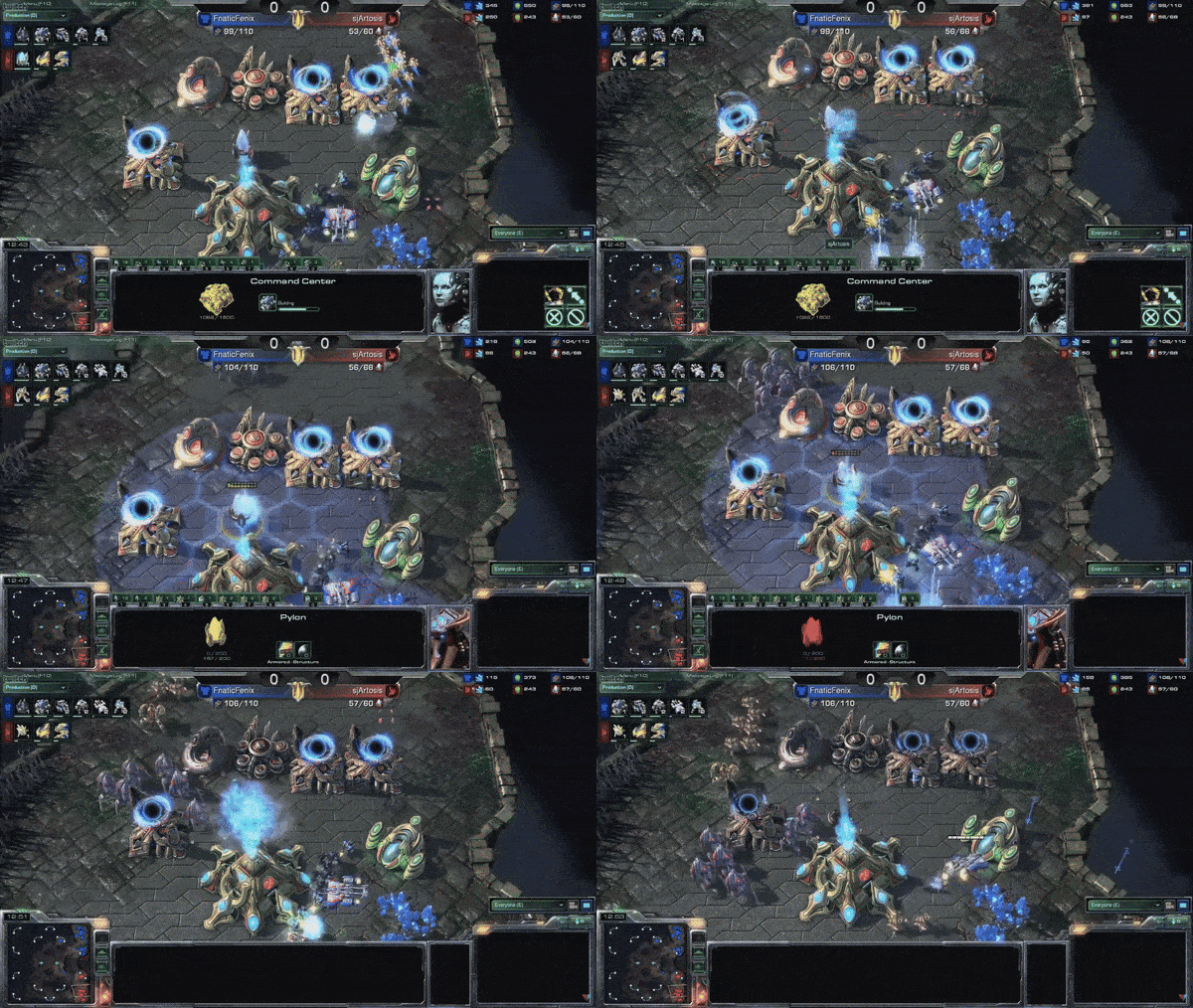
In many ways these games are a race for resources and often gameplay mechanics are implemented to drain, limit or simply keep balance in check. Civilizations barbarian camps limit unfettered expansion and serve as an early game challenge that if dealt with carelessly can set the player back by multiple turns. In a similar way, Starcraft’s Protoss pylons slow expansion, power buildings but also create a potentially exploitable weakness.
In RTSs, time itself becomes a more meaningful resource that stresses a player’s decision making. When limited it exposes poorer macro choices or micro inefficiencies. On the other hand, vision or lack of it, results in the imperfect information at the core of these games.
Designing XenoRift
XenoRift is a single player RTS simultaneously played in two overlapping dimensions. It’s set between our future, a near depleted universe approaching its heat death, and an alien universe brimming with opportunity and rich with resources.
When designing the game, I wanted to explore vision itself as a gameplay element beyond fog of war. Additionally I wanted to recreate the claustrophobic atmosphere of the first Alien film, where the unknown felt like a constant threat on par with the alien itself.
Traditionally outside your current normally rendered visions (where you have active units/buildings), fog of war acts as either:
- Darkened regions: A record of where you’ve been but aren’t currently active in. Units are often not visible in these regions, whilst buildings are often displayed in the state you last saw them in.
- Solid darkness: Indicate that the area has never been explored, where even map topology is unknown.
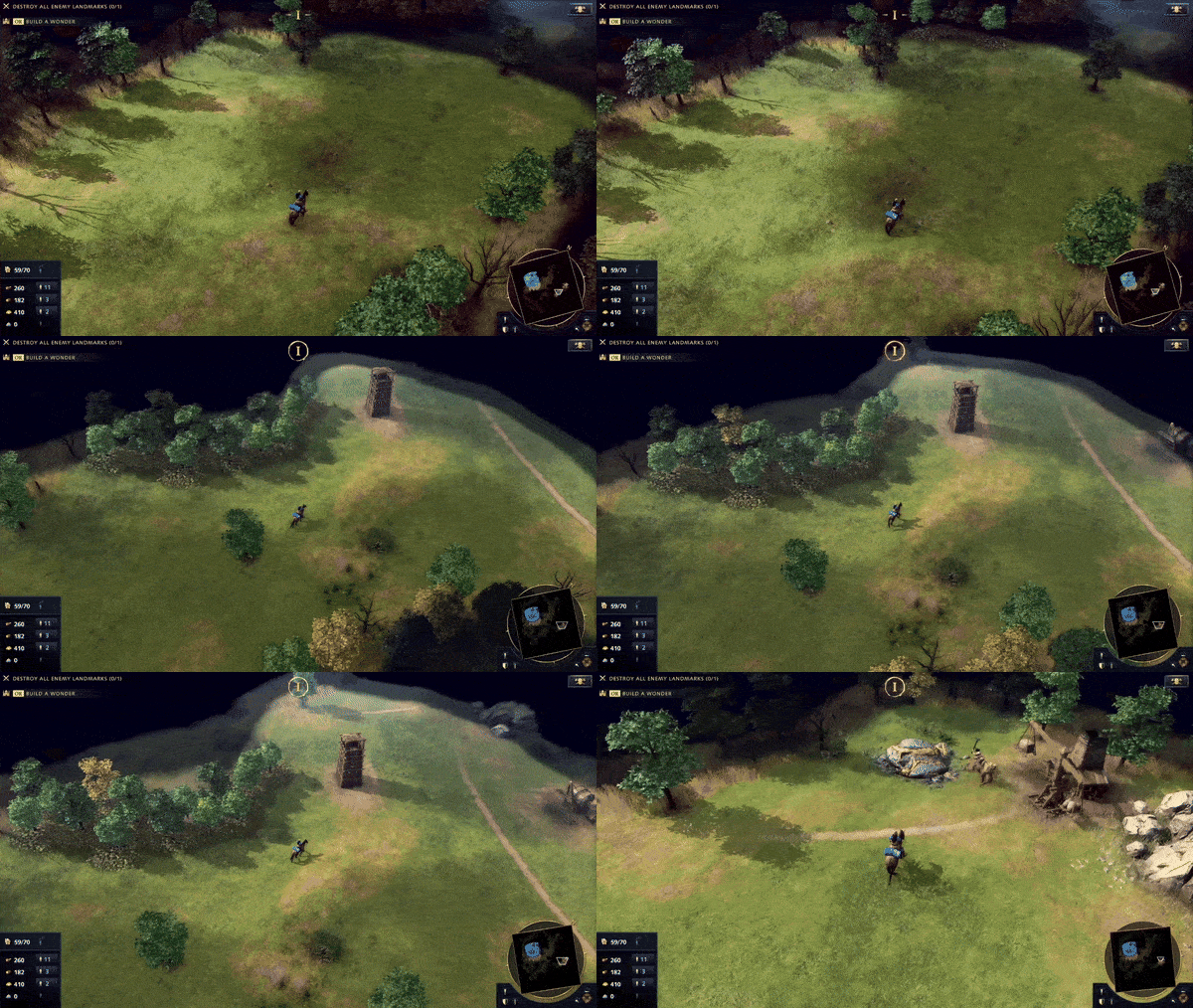
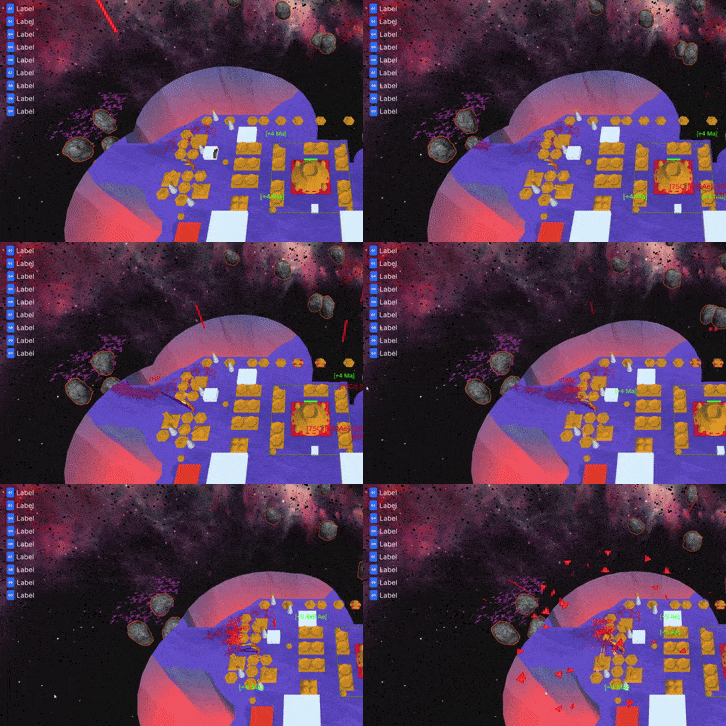
For XenoRift, I wanted gaining vision to feel like the natural counterplay to the unknown akin to how Xel’Naga towers function and to put a greater emphasis on map control in a similar fashion to Quake 1v1s. This started by removing the darkened FOW regions to create a harsh barrier at the bounds of exploration. There would be no sense of safety gained in seeing visible but darkened regions of previously explored areas, in turn nurturing a more claustrophobic feeling. Additionally, I’d highlight this barrier between known and unknown with the use of vibrant purples of the alien world against the darkness of mankind’s space.
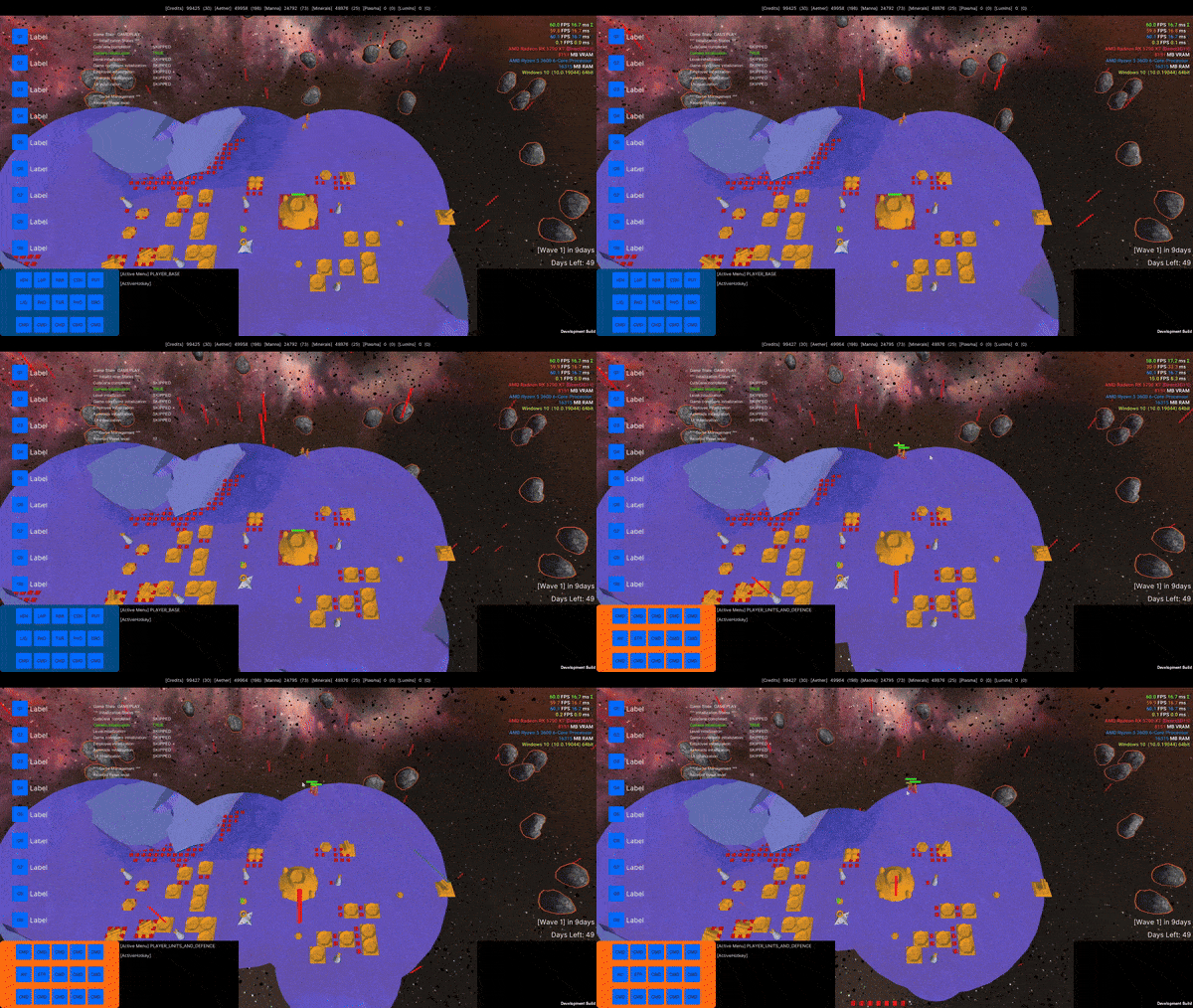
Adding to the threat of the unknown, I implemented player units such that they could only attack what was visible, whilst the Xenos could attack the player regardless. The player would need to uncover the alien dimension and have direct sight of the Xenos to shoot them.
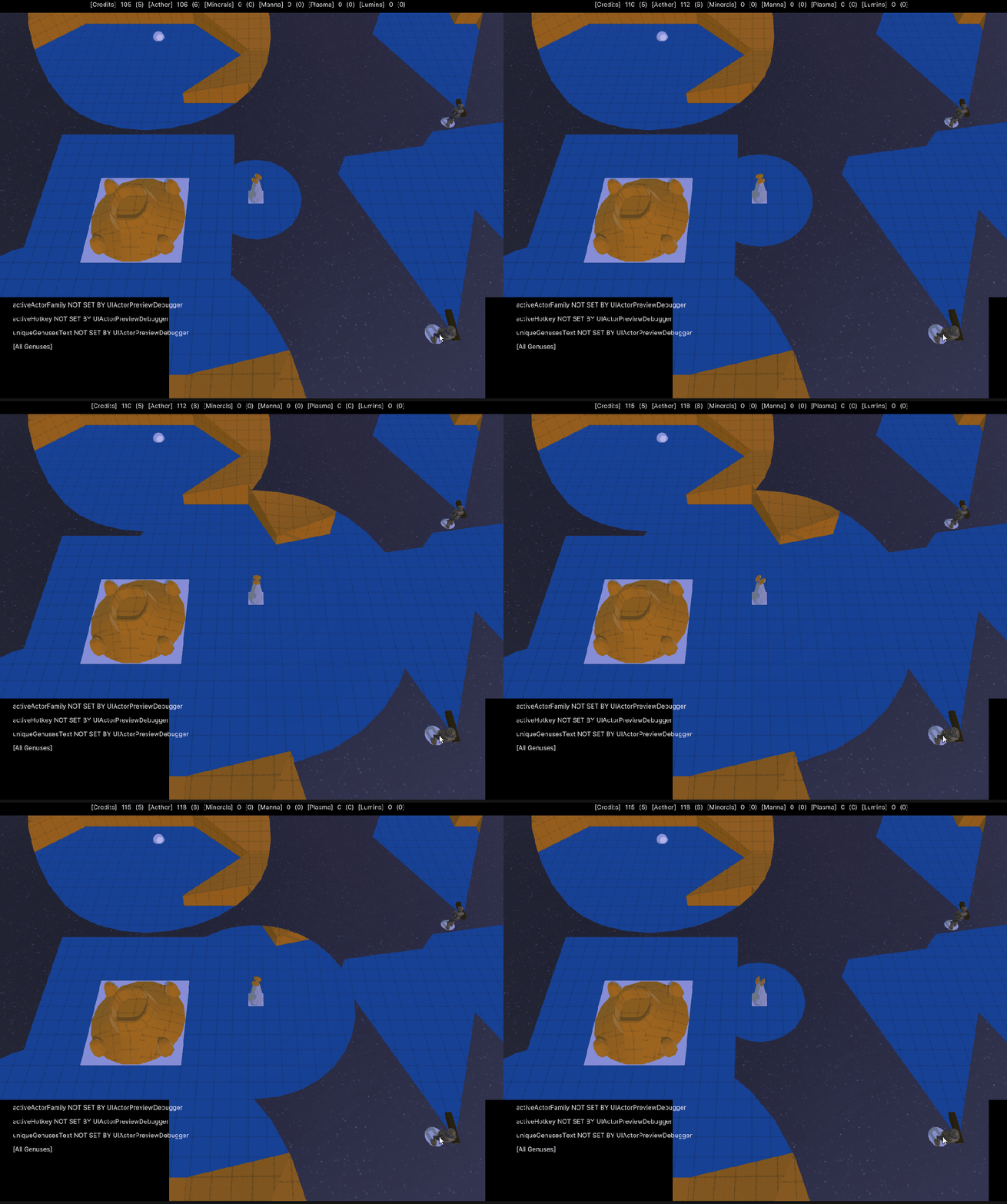
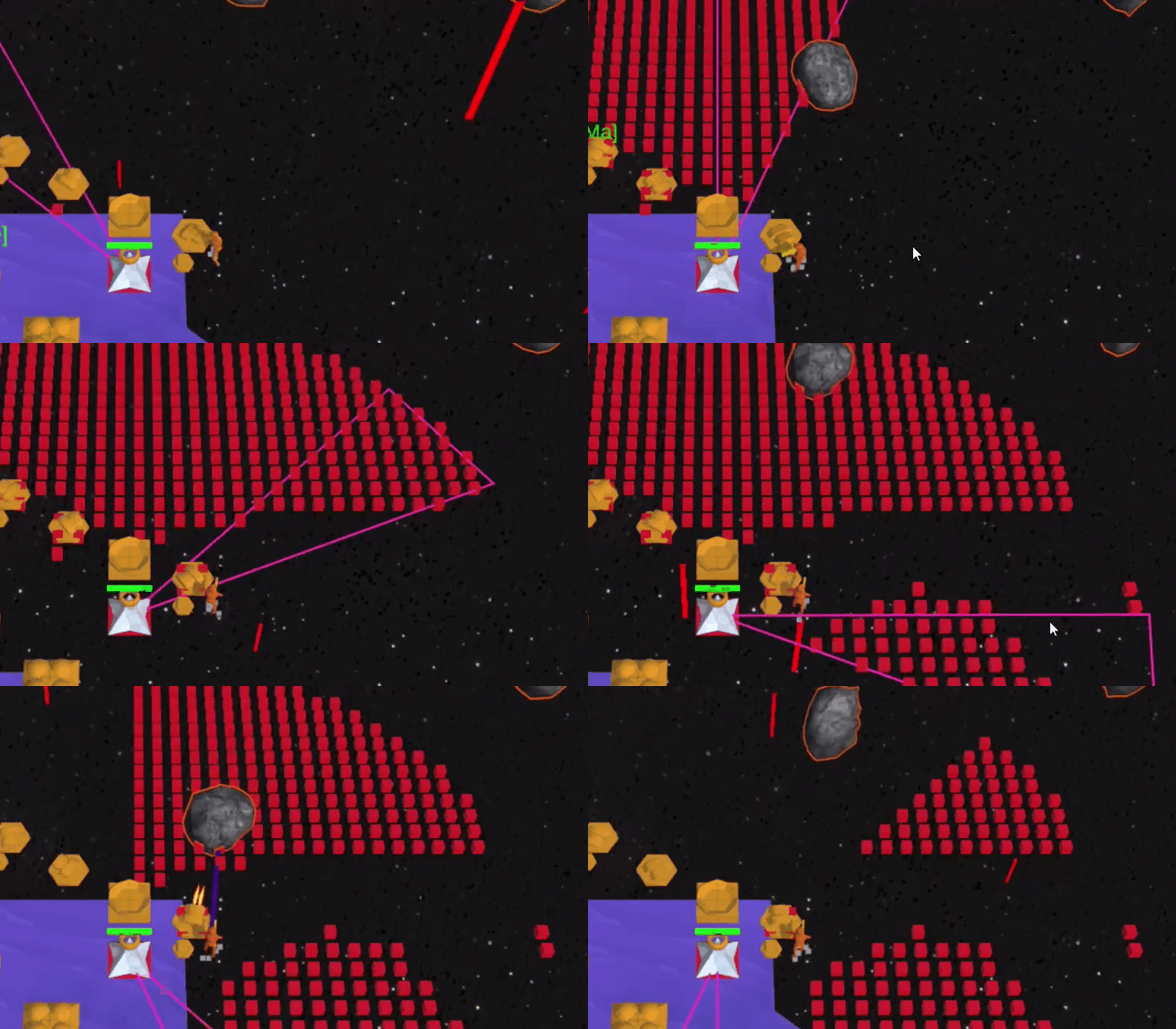
Further still, most buildings wouldn’t provide any additional forms of vision until mid to late game upgrades. The exceptions to this were the player’s command centre, the lighthouse (left below) which would create an extended sphere of vision and the radar tower (right below) that would ping enemy locations and mark inaccessible areas.
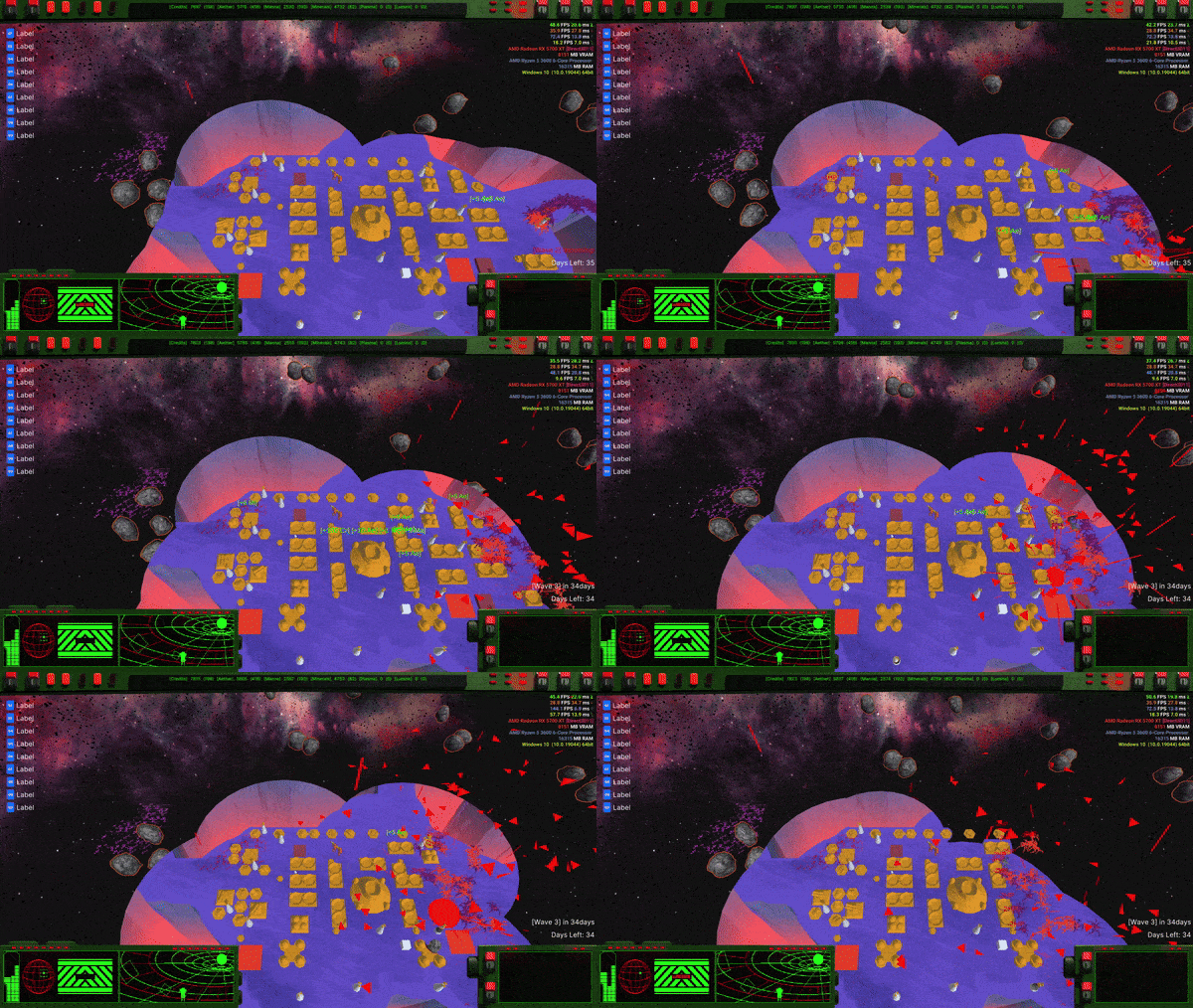
The gameplay started to develop into a tug-of-war between losing or gaining vision. Play too defensive and you may be unprepared for the next wave of Xenos. Overextend and you could lose vision and be overrun by unseen threats. A solid mid and late game began to develop.
Addressing the Early Game
In many RTS games, the early game can become slow and procedural. There’s little to no threat possible as the players’ doesn’t have real counterplay ready and so the beginning can often become a near mindless build order until finally there’s enough going to break into the mid game.
The design decisions around created a claustrophobic feeling compounded this issue. With the obfuscation of map topology and the location of the more traditional resources, the early game began to encourage an even more conservative playstyle. Claustrophobic but not exactly fun.
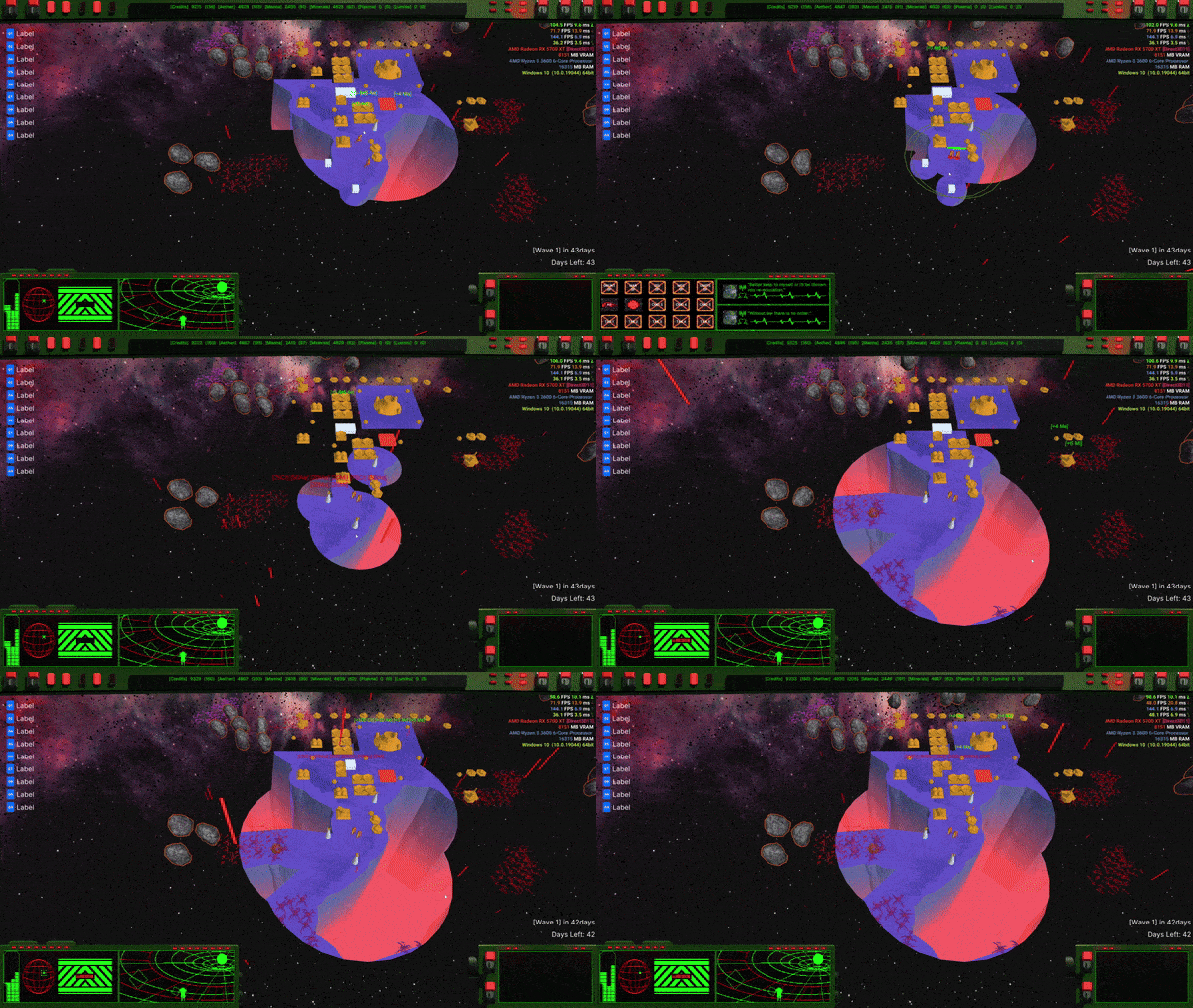
In the lore, the player’s universe was closing towards its heat death and all useful resources in it were nearly depleted. As the commander of a mining colony you were tasked with crossing dimensional rifts appearing in asteroid belts to gather the abundant resources in the Xenos’ dimension. Functionally at this point the player’s universe really only served as FOW and an opportunity to experiment with stencil shaders. There was however something contextually relevant that playtesting would reveal to have more gameplay value, improve both the early game and reinforce the value of the vision as a resource. Asteroids.
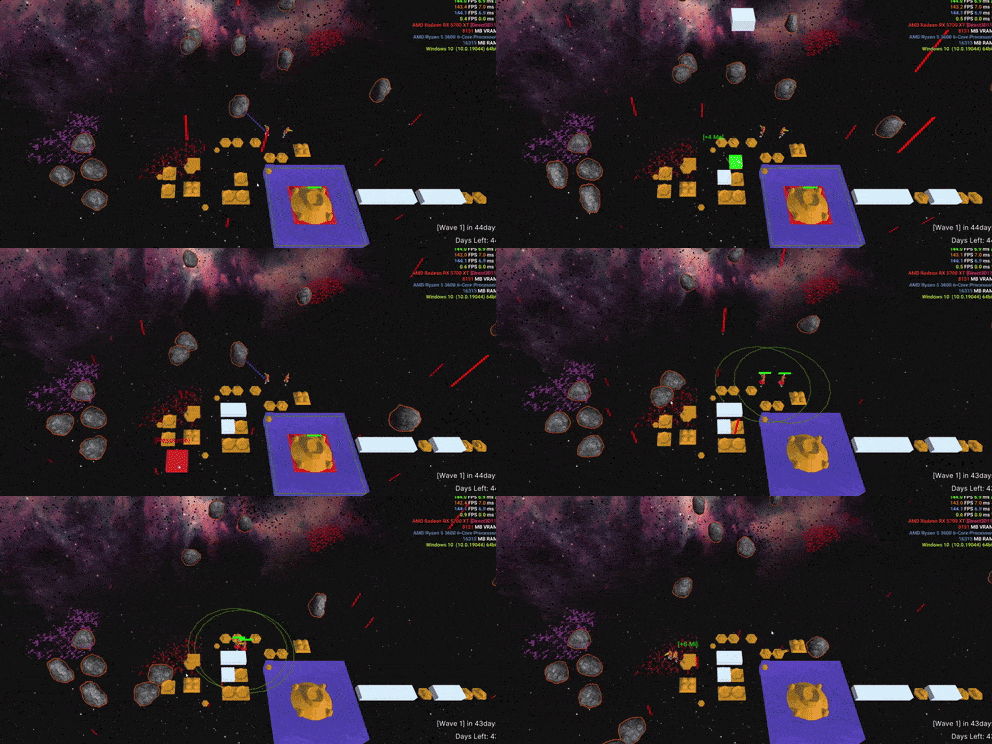
Up till now asteroids were just cosmic set dressing, but they could be more. They existed only in the player’s universe, had no collision detection and disappeared as the Xeno universe was revealed. If they were to become collidable gameobjects that could move and inflict damage upon touch, they’d provide a predictable but not overpowered threat to base expansion. In the mid game they could be tuned for balancing difficulty and by the late game they’d practically disappear behind the alien universe whilst the player focused on the escalating waves of Xenos.
The early game units now had something more compelling to do in the micro challenges of shooting asteroids down. Still, the player could choose to instead focus on expanding their vision and nullify the threat behind the revealed Xeno universe. This had the added bonus of effectively buffing and reenforcing the value of vision providing buildings.
The player was now being presented with meaningful early game decisions and playtesters’ approaches began to differ. Mass grunts with minimal vision infrastructure or litter the map with vision buildings, genuine player expression developed.
Wrapping Up
This game started as a love letter to RTSs and a project to explore game design within the genre. The impetus for it came when thinking about how the sci-fi horror of the first Alien film, known for its feelings of claustrophobia and isolation, might work in a genre where the viewport was so far removed from the action. It was this thought experiment that led me to using the tug of war between gaining and losing vision as the central gameplay mechanic and thus investigating it as a resource.
As for its current state, the team is refactoring XenoRift’s vertical slice for Unity DOTs, whilst its art direction is being finalised. As a designer, I feel I’ve manage to explore many of the ideas that drew me to this project and hopefully, as steady progress is made, there will be updates to come.
 Idlemouse